Automotive Lightweighting: Producing Composite Parts with Press Technology
Electric vehicles and emission targets make lightweighting essential. How SMC, GMT and CFRP parts are produced in series on hydraulic presses.
Every kilogram affects a vehicle’s energy consumption and range. To offset battery weight in electric vehicles and meet emission targets in combustion vehicles, lightweighting has moved to the centre of automotive design — and composites are among its most powerful tools.
Why composites?
- Low density: SMC is about 1.9 g/cm³ versus 7.85 g/cm³ for steel.
- Part integration: replacing several stamped parts with one moulding reduces assembly steps and fasteners.
- Corrosion resistance and design freedom
- Electrical insulation: an advantage for battery enclosures and electrical components.
Which parts are press-moulded?
- Boot tubs and spare-wheel wells
- Bumper systems, bonnet and tailgate inner panels
- Front-end carriers and structural brackets
- Battery enclosure lids and underbody shields
- Truck and bus cab panels
A press line for series production
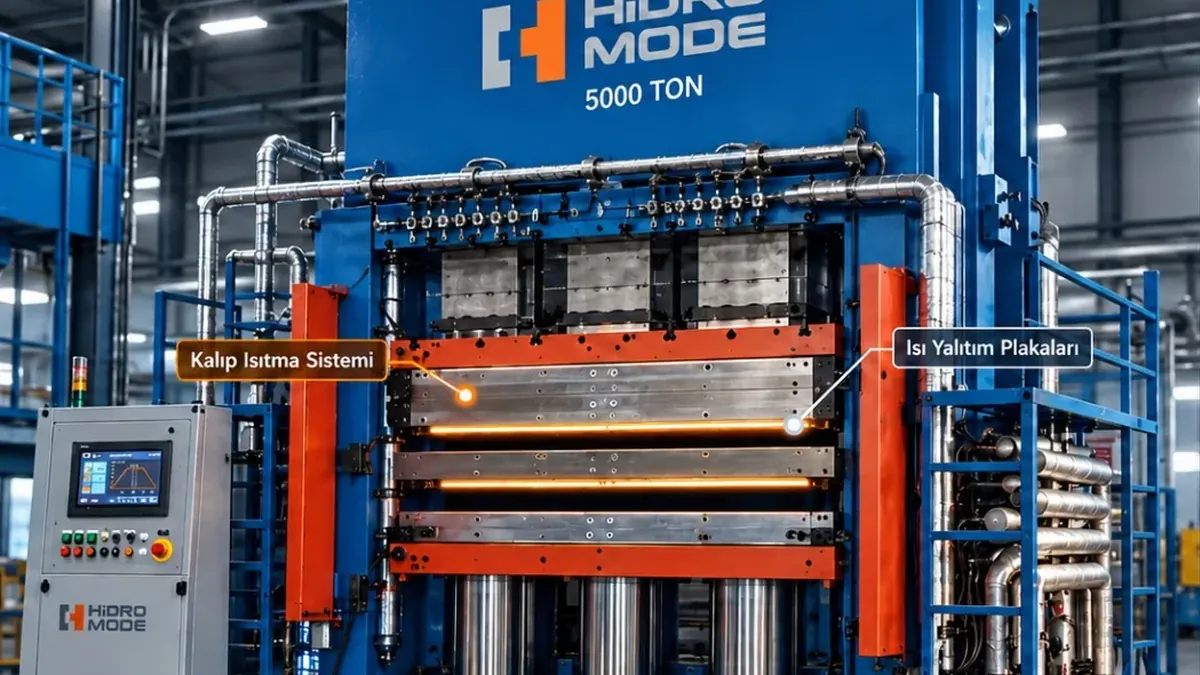
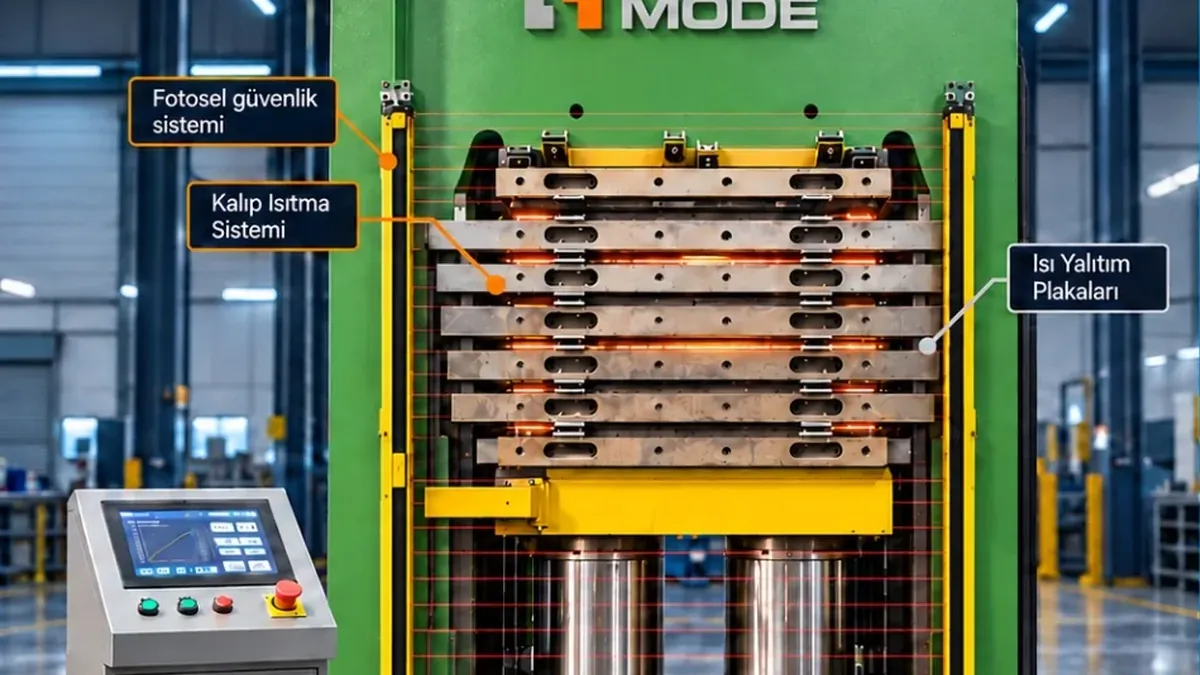
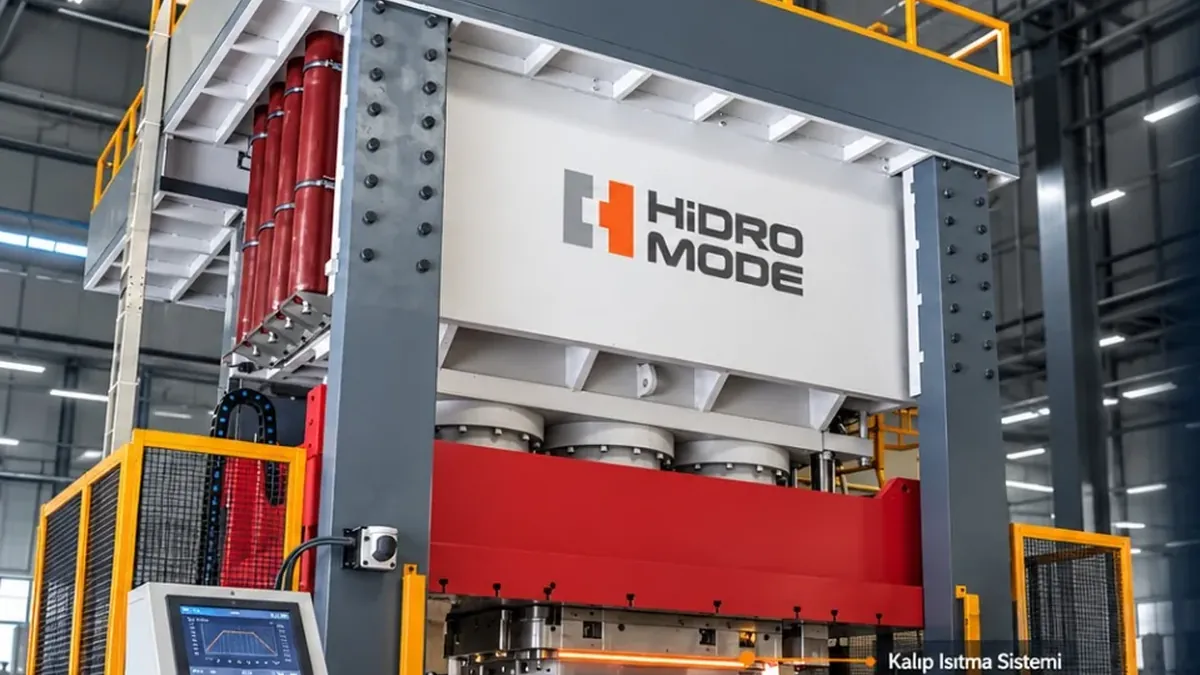
Automotive volumes demand short cycle times and high repeatability, so composite automotive parts are usually produced on press lines in the 2,000–5,000-ton class with:
- Fast closing and precise pressing speed profiles
- Active parallelism for large panels
- Robotic charge loading and part removal
- Quick die change with moving bolsters
- Part-by-part process data logging
Process by material
| Material | Typical part | Press feature |
|---|---|---|
| SMC | Panels, bonnets, boot tubs | Heated mould, breathing |
| GMT / LFT | Underbody shields, front-end | Fast closing, warm mould |
| CFRP / HP-RTM | Structural parts | High pressure, precise control |
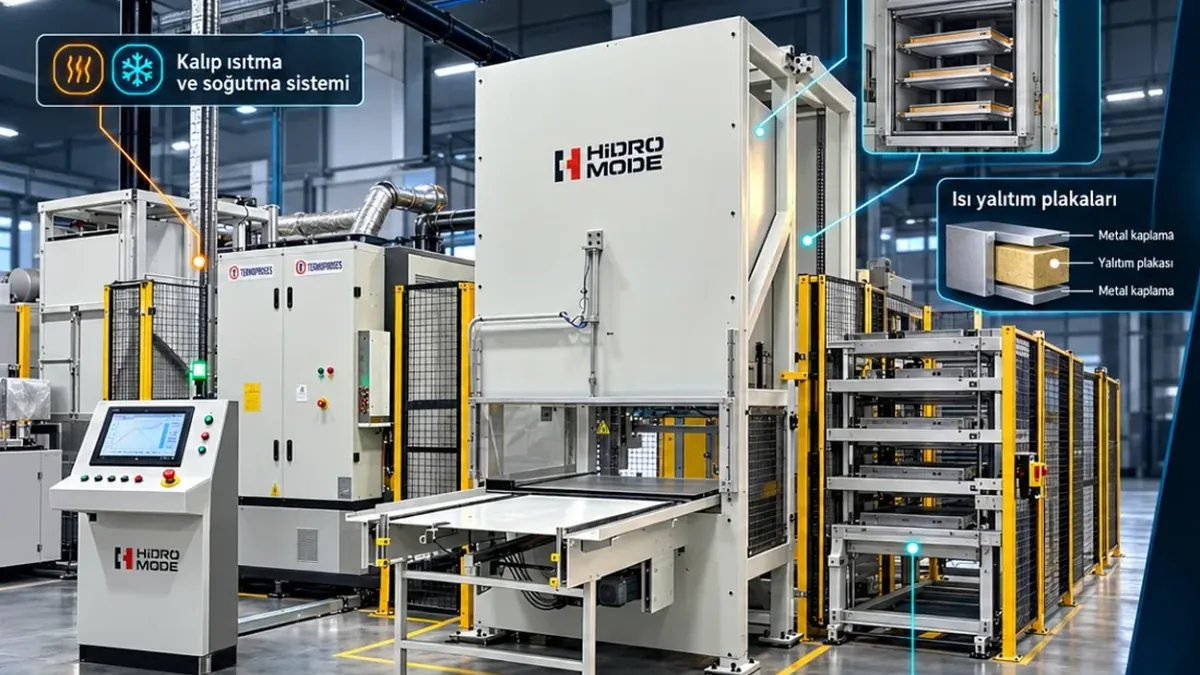
For automotive suppliers, Hidromode engineers composite press lines on a turnkey basis — presses together with robots, die change and cooling stations.
Frequently Asked Questions
How much lighter are composite parts than steel?
SMC density is about 1.9 g/cm³ versus 7.85 g/cm³ for steel; depending on part design this gives a clear weight advantage.
What tonnage is needed for automotive composite parts?
Large panels typically use the 2,000–5,000-ton class; the exact value is calculated from part area and in-mould pressure.
Where are composites used in electric vehicles?
In battery enclosure lids, underbody shields, structural brackets and body panels.
Our engineers will help you with press selection, capacity and automation.