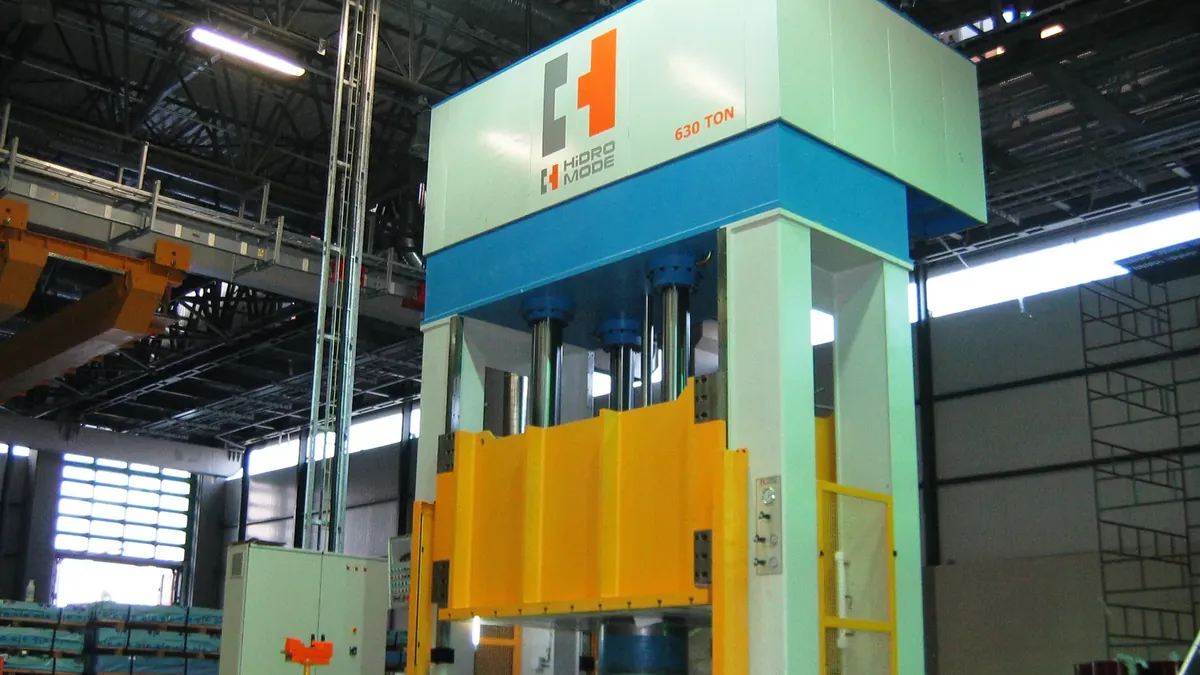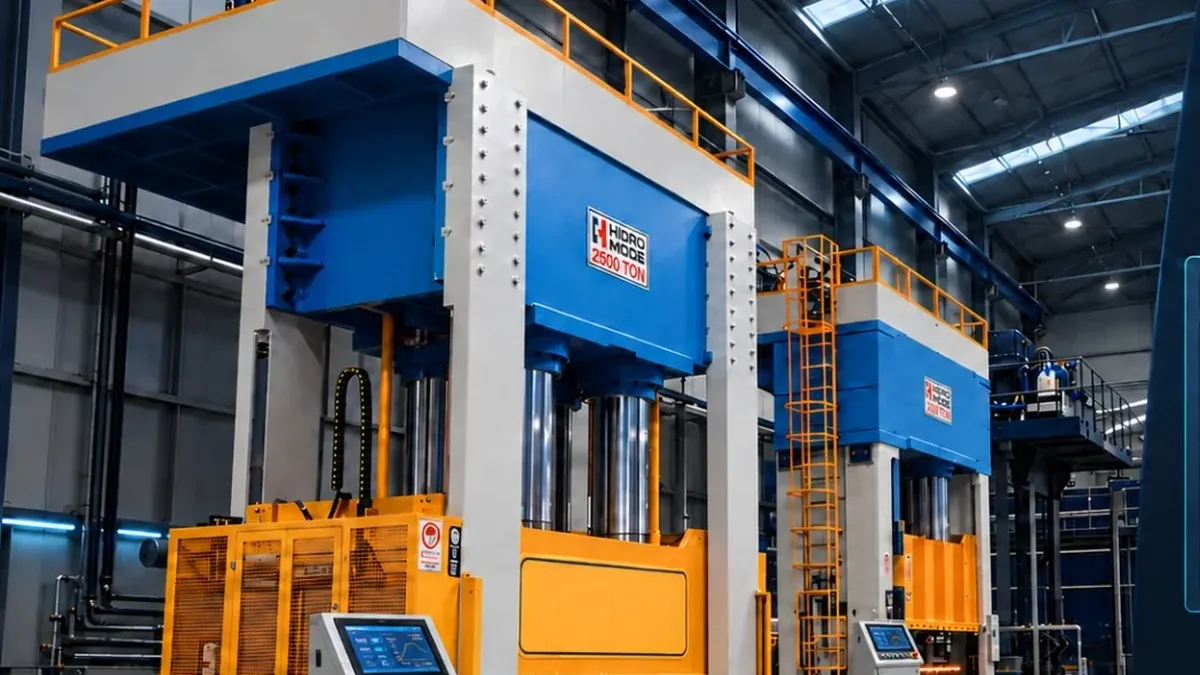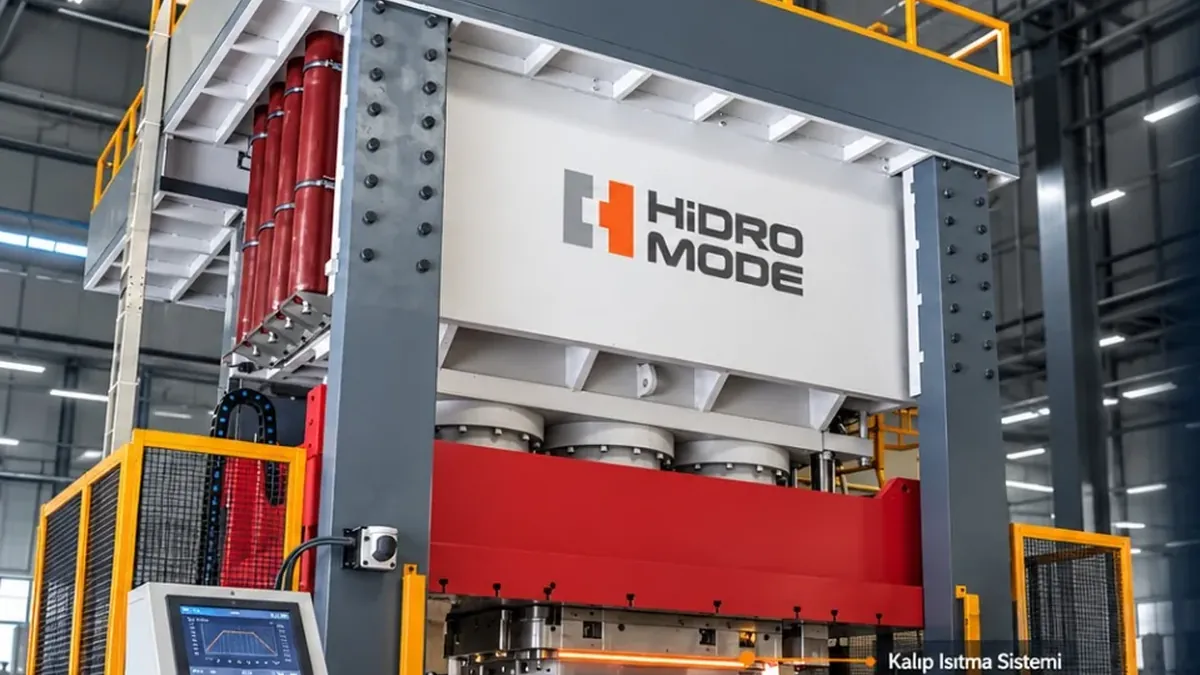
Hydraulic or Mechanical Press for Deep Drawing?
Hydraulic and mechanical presses each have strengths in deep drawing. A comparison of force characteristics, speed, flexibility and cost.
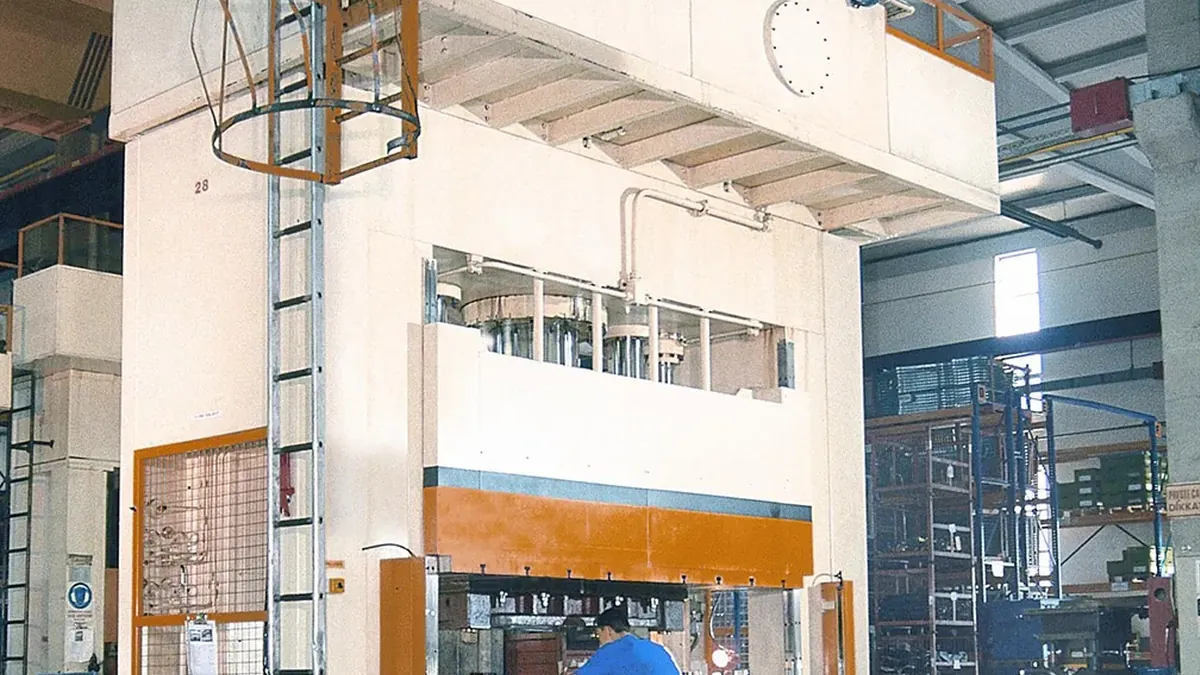
Choosing a press type in metal forming depends directly on part depth, volume and geometry. In deep drawing especially, knowing the differences between hydraulic and mechanical presses is the basis of the right investment.
Force characteristics
Mechanical presses reach their nominal force only near bottom dead centre. Hydraulic presses can apply nominal force at any point of the stroke. Since deep drawing needs force from the moment the draw begins, this difference is decisive.
Speed and output
Mechanical presses achieve far more strokes per minute on shallow parts and blanking. Hydraulic presses optimise output with fast approach and return and a controlled drawing phase, giving a quality advantage on deep and complex parts.
Flexibility
- Stroke, speed and force on a hydraulic press are changed by program, adapting easily to different dies.
- Programmable cushion force controls sheet flow over the stroke.
- Overload is naturally limited by a relief valve, protecting die and press.
Comparison table
| Criterion | Hydraulic press | Mechanical press |
|---|---|---|
| Force | Nominal over full stroke | Near bottom dead centre |
| Stroke rate | Medium | High |
| Stroke adjustment | Programmable | Limited |
| Deep drawing | Very suitable | Limited depth |
| Overload protection | Inherent | Extra system required |
| Investment (high tonnage) | Advantageous | High |
Which one, when?
Mechanical presses suit high-volume, shallow, simple parts; hydraulic presses excel with deep, complex, varied part portfolios and high-tonnage applications. That is why hydraulic deep drawing presses are common in white-goods drums, cookware, automotive deep-drawn parts and LPG cylinders.
Frequently Asked Questions
Why are hydraulic presses preferred for deep drawing?
They apply nominal force at any point of the stroke and offer programmable cushion force, preventing splits and wrinkles in deep parts.
Are hydraulic presses slow?
Approach and return are fast and the drawing phase is controlled; with the right pumps and valves cycle times are optimised.
Which press is more economical at high tonnage?
At very high tonnage, hydraulic presses are usually the more economical and flexible solution.
Our engineers will help you with press selection, capacity and automation.